Why Cash for Homes Offers Speed and Certainty in a Slow Market
The Real Cost of Waiting for a Traditional Sale
Most homeowners assume that selling a house means listing it on Zillow, staging rooms, and waiting for the right buyer. That path works well for some, but it also carries hidden costs that many people only discover after they have already committed. Mortgage payments, utility bills, and insurance do not pause while you wait. If the property sits for three months or six months, those carrying costs add up fast. Add in a few unexpected repairs from a home inspection, and the net proceeds shrink dramatically.
For sellers who are dealing with an inherited property, a job relocation, or simply a house that needs more work than they can afford, the traditional route can feel like a trap. That is where the concept of cash for homes comes into play. It offers an alternative that prioritizes speed and certainty over top dollar.
Understanding the Cash Buyer Landscape
Not all cash buyers are the same. Some are individual investors who look for deep discounts. Others are companies like WeBuyHouses or even iBuyers such as OpenDoor that use algorithms to generate offers quickly. A true cash buyer has the funds already in hand, often sitting in a bank account or a line of credit. That means no loan contingency, no waiting for a mortgage approval, and no risk of the deal falling through because the bank changed its mind.
When you receive an offer letter from a cash buyer, the timeline typically shrinks from 45 or 60 days to two weeks or less. The buyer pays closing costs, and the seller often walks away with net proceeds that are predictable from the start. There is no last-minute renegotiation after a home inspection reveals an old roof or a faulty furnace. The house sells as-is.
Who Really Benefits from a Cash Sale
The typical seller who chooses cash for homes is not someone who could easily list on the open market and wait. More often, it is a person facing one of several specific situations:

- A homeowner behind on mortgage payments and facing a potential foreclosure or tax lien.
- Someone who inherited a property through a probate sale and does not want to manage repairs or deal with tenant issues.
- A seller whose property has deferred maintenance that would fail a standard home inspection or make it hard to qualify for an FHA 203(k) loan.
- An owner who needs to relocate quickly for a job or a family emergency and cannot afford to wait through a long escrow.
- A person dealing with an HOA that has piled on fines or special assessments, making the property unattractive to traditional buyers.
In each of these cases, the speed and certainty of a cash offer outweigh the possibility of a higher sale price on the open market. The trade-off is real, but for many sellers, the peace of mind is worth it.
The Difference Between a Cash Buyer and an iBuyer
Companies like OpenDoor and other iBuyers have popularized the idea of instant offers and quick closings. But there is a distinction worth understanding. An iBuyer typically uses an automated valuation model based on public data and recent sales. The offer might look attractive, but the iBuyer will deduct repair costs, closing costs, and sometimes a service fee. The final net can be lower than what a direct cash buyer would offer, especially for properties that need significant work.
A direct cash buyer, by contrast, often specializes in buying homes as-is. They do not rely on the same algorithm. They look at the property itself, its location, and its potential after repairs. That can sometimes lead to a higher net offer, particularly for a distressed property that an iBuyer might discount heavily.
Another key difference is that iBuyers usually require the seller to pay a commission or a service fee, while many direct cash buyers cover the closing costs themselves. That alone can save the seller several thousand dollars.
How to Evaluate a Cash Offer
If you receive a cash offer, the first thing to check is the source. Is the buyer a local realtor who works with investors, a national company, or a private individual? Each has different motivations. A local realtor might be representing an investor client who wants to flip the house. A national company might be looking to add to its rental portfolio. A private individual might be a first-time buyer who has saved up cash but cannot qualify for a loan due to credit issues.
Ask for proof of funds. A legitimate cash buyer will provide a bank statement or a letter from a financial institution showing that the money exists. Without that, the offer is not really cash. Also, ask whether the buyer plans to do a home inspection. Some cash buyers waive the inspection entirely, which saves time and reduces the chance of renegotiation. Others will do an inspection but only for informational purposes, meaning they will not ask for repairs or price reductions based on what they find.
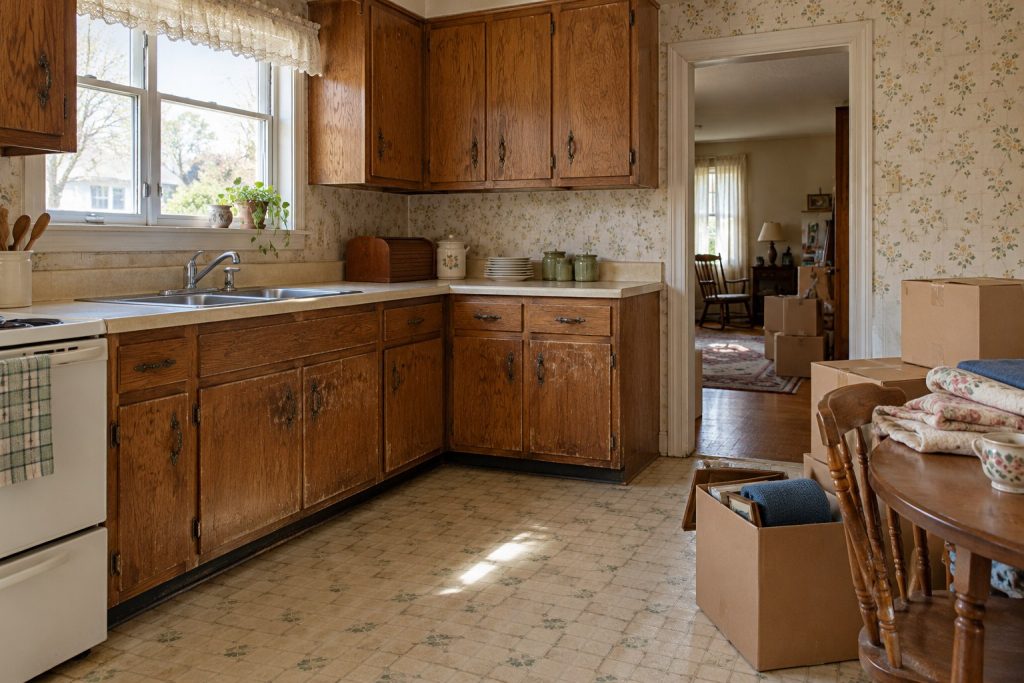
Finally, compare the net proceeds. A cash offer of $150,000 with no closing costs and no repairs might put more money in your pocket than a traditional offer of $170,000 that requires $15,000 in repairs, $10,000 in closing costs, and a two-month wait.
The Role of Title Companies and Equity
When you sell for cash, the transaction still goes through a title company. The title company verifies that there are no liens on the property, including any tax lien or HOA lien, and that the seller has clear ownership. If there is a probate sale involved, the title company will also check that the estate has been properly administered. This step protects both the buyer and the seller.
Equity is another factor that matters. If you have significant equity in the home, a cash buyer may offer a price closer to market value because they know they can resell or refinance the property. If equity is low or negative, the buyer will factor in the cost of holding the property and making repairs. Understanding your own equity position helps you set realistic expectations for what a cash offer might look like.
When a Cash Sale Makes More Sense Than an FSBO or Short Sale
Selling a home yourself, known as FSBO, can save on commission but comes with its own headaches. You have to manage showings, negotiate with buyers, and handle all the paperwork. If the buyer needs financing, you also have to wait for their loan to close. A cash sale eliminates most of that uncertainty.
A short sale, where the lender agrees to accept less than the mortgage balance, is another alternative for homeowners who are underwater. But short sales can take months and require extensive documentation. A cash buyer who pays enough to cover the mortgage can help the seller avoid a short sale altogether. That is often a better outcome for everyone involved.
For sellers of HUD homes or REO properties, the process is already complicated by government timelines and paperwork. A cash buyer who specializes in those situations can streamline the process and close faster than a traditional buyer relying on an FHA 203(k) loan or another government-backed program.

Making the Decision That Fits Your Life
The best sale method depends on your priorities. If you need the highest possible price and have the time to wait, a traditional sale with a local realtor may be the right move. But if you need speed, certainty, and simplicity, the cash for homes route is hard to beat. It removes the stress of showings, the risk of a failed inspection, and the uncertainty of a buyer's financing falling through.
Before you sign anything, talk to a local realtor or a real estate attorney who understands your market. They can help you evaluate the offer and make sure you are not leaving money on the table. But do not dismiss a cash offer out of hand. For many sellers, it is not just a backup plan. It is the best plan.